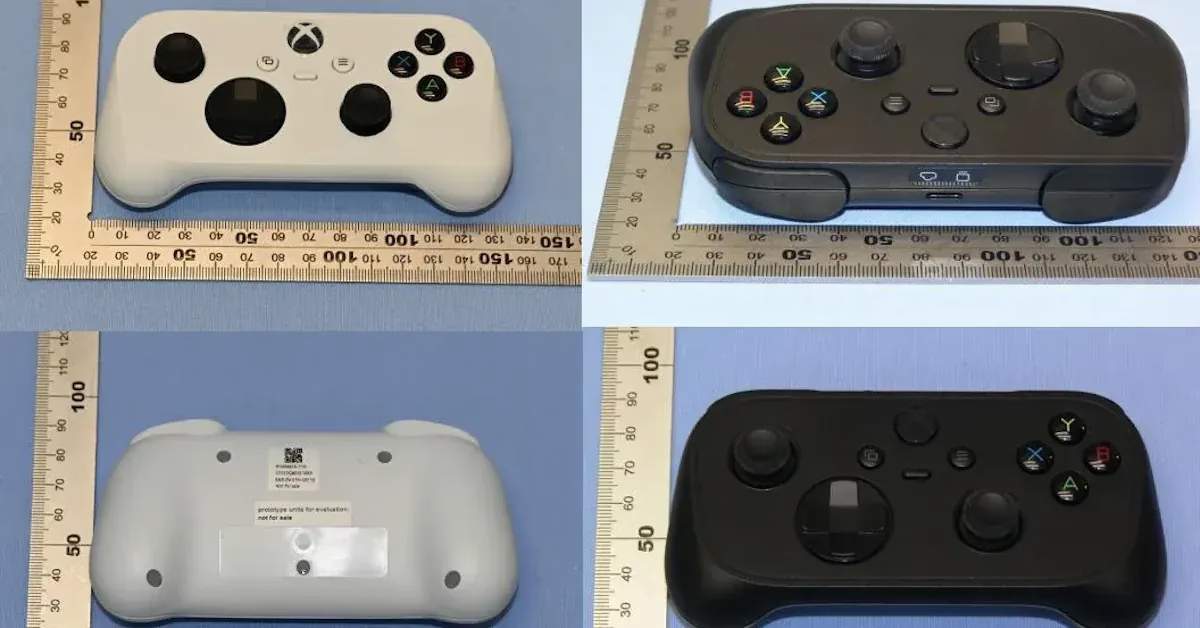
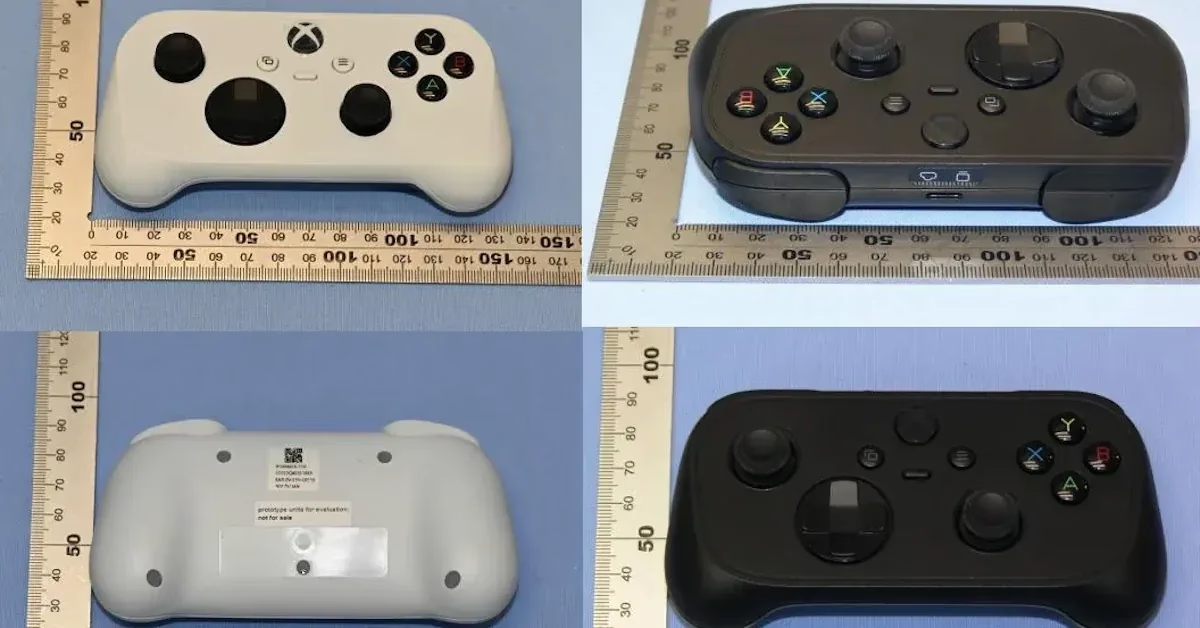
I've been following Xbox hardware developments closely, and recent regulatory filings have just given us our first real look at what Microsoft has planned for its next generation of controllers. Thanks to documents published by Brazil's Anatel agency, we now know that two significant peripherals are heading our way: the Xbox Elite Series 3 and a brand-new compact cloud gaming controller.
What Makes the Elite 3 Different? 🎮
From what I can see in the leaked documentation, Microsoft is taking a bold step forward with the Elite 3. The standout feature is undoubtedly the dedicated cloud mode button that allows direct connection to Xbox Cloud Gaming servers. This isn't just a marketing gimmick—it's designed to genuinely reduce latency by cutting out unnecessary connection layers.
The technical specifications reveal some intriguing hardware choices:
-
Removable 1,528mAh battery (a departure from the Elite 2's integrated power source)
-
Two mysterious scroll wheels mounted on the bottom edge
-
Repositioned inner grip paddles moved closer to the center
-
Compatibility with various custom paddle lengths
What really catches my attention are those scroll wheels. While their exact function hasn't been officially confirmed, I suspect they're related to thumbstick tension adjustment or paddle travel customization. This would give competitive players unprecedented control over their hardware configuration without needing additional tools.
Design Philosophy Stays Familiar
Despite these innovations, Microsoft appears to have maintained the core design language from the Elite 2. This makes sense from a user experience perspective—players who invested time learning the Elite 2's layout won't need to completely relearn their muscle memory. The interchangeable components system also carries forward, ensuring compatibility with existing aftermarket accessories.
The Compact Cloud Controller Revolution ☁️
Perhaps even more interesting than the Elite 3 is the smaller, portable gamepad designed specifically for cloud gaming. This device represents a fundamental shift in how Microsoft thinks about mobile gaming hardware.
Key Technical Specifications:
| Feature | Specification |
|---|---|
| Wireless Technology | Wi-Fi 6 |
| System-on-Chip | Realtek RTL8730E |
| Battery Capacity | 500mAh (built-in) |
| Alternative Connectivity | Bluetooth 5.3, USB-C |
| Battery Type | No AA compartment |
The genius of this design lies in its direct network connection. By bypassing the traditional smartphone Bluetooth routing, this controller connects straight to your home Wi-Fi network, dramatically reducing input lag. If you've ever played through Xbox Cloud Gaming on your phone, you know how frustrating even minor latency can be during fast-paced action sequences.
This approach isn't entirely new—Google tried something similar with the Stadia controller before that platform shut down. However, Microsoft has the advantage of an established ecosystem and ongoing commitment to cloud gaming infrastructure. 🌐
What This Means for Different Gaming Scenarios
I think these controllers serve distinctly different audiences, and Microsoft knows exactly what they're doing:
For Competitive Console Players:
The Elite 3 offers professional-grade customization with the added benefit of optimized cloud connectivity. Those scroll wheels could become essential tools for players who constantly tweak their setup between game sessions.
For Mobile Cloud Gamers:
The compact controller solves the portability problem without sacrificing performance. Its 500mAh battery keeps weight down while still providing reasonable play sessions, and the Wi-Fi 6 implementation ensures you're getting the lowest possible latency over wireless connections.
For PC Enthusiasts:
Both controllers maintain standard Bluetooth and USB-C connectivity, meaning they'll work perfectly well with desktop setups. You're not locked into cloud gaming just because that's the headline feature.
Release Timeline and Market Positioning 📅
While Microsoft hasn't officially announced either peripheral, regulatory filings typically appear 2-3 months before commercial release. Industry insiders are pointing toward the Xbox Games Showcase in June 2026 as the likely reveal event.
There's also speculation that the Elite 3 might launch alongside the rumored Project Helix console—a digital-focused Xbox variant that would complement the cloud-first philosophy these controllers embody.
Strategic Implications
What fascinates me most about these leaks is how they reveal Microsoft's broader hardware strategy. Cloud connectivity isn't being treated as a secondary feature anymore—it's becoming a core design principle across multiple form factors. This suggests Microsoft is betting heavily on hybrid gaming scenarios where players seamlessly transition between local and cloud-based experiences.
The asymmetrical thumbstick layout on the compact controller also tells me Microsoft isn't abandoning traditional Xbox ergonomics, even in their most experimental hardware. That consistency will help existing users adopt these new devices more readily.
Looking Forward 🔮
Based on these regulatory documents, I'm genuinely excited about where Xbox hardware is heading. The combination of premium customization (Elite 3) and portable convenience (compact cloud controller) covers a wide range of use cases that weren't previously well-served by existing peripherals.
What remains unknown:
-
Pricing for both controllers (though Elite series traditionally commands premium pricing)
-
Official launch dates beyond speculation
-
Whether the scroll wheels can be programmed for in-game functions
-
Battery life estimates under real-world usage
-
Compatibility with legacy Xbox consoles
The emphasis on reducing latency across the entire ecosystem—from local competitive play to mobile cloud streaming—represents a concrete evolution in Microsoft's approach to gaming hardware. Whether you're grinding ranked matches or catching up on Game Pass titles during your commute, these leaked peripherals suggest Microsoft is committed to minimizing the technical barriers between you and your games.
If you're looking for cloud gaming titles to test these controllers, you can compare Control prices on DealNest. Right now, Control is available for $0.62 (90% off, an all-time low).
I'll be watching closely for official announcements at the June showcase. If these controllers deliver on their technical promises, they could set new standards for what players expect from gaming peripherals in 2026 and beyond. 🚀