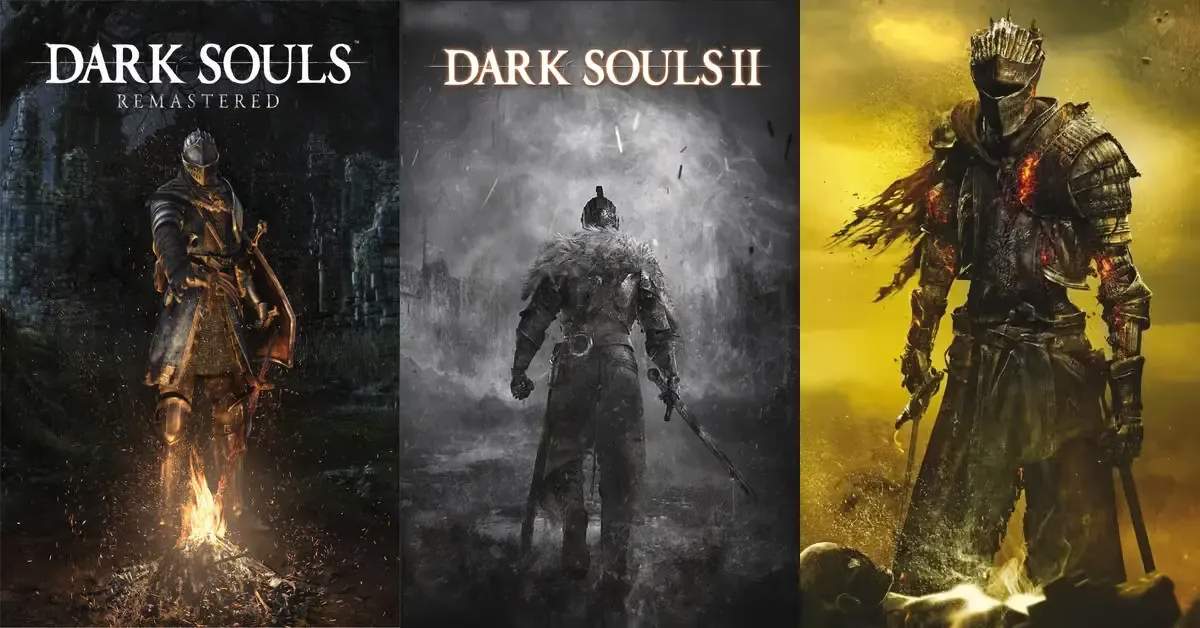
I still remember the first time I picked up Dark Souls. Like many players, I thought I was ready for a challenging game. I wasn't. Within the first hour, I'd died more times than I had in entire playthroughs of other games. But something kept pulling me back, like a moth drawn to a flame that repeatedly burns it. That's the magic of Dark Souls – it's brutally honest about its difficulty, yet impossibly compelling.
The Unlikely Hero Behind Dark Souls
The story of Dark Souls begins with Hidetaka Miyazaki, born September 19, 1974, in Shizuoka, Japan. After earning his degree in Social Sciences from Keio University, Miyazaki took what seemed like a safe path, working as an account manager at Oracle. But at 29, everything changed when he played Ico (2001). That game struck him like lightning – suddenly, he knew exactly what he wanted to do with his life.
In 2004, Miyazaki joined FromSoftware as a game planner. He cut his teeth on titles like Armored Core: Last Raven, eventually directing Armored Core 4 and its sequel. But his career-defining moment came when he took over a struggling project: Demon's Souls. That game became the foundation upon which Dark Souls would be built.
When Dark Souls launched in 2011, it didn't just succeed – it created an entirely new genre: Souls-like games. The formula was deceptively simple: punishing combat, deep world design, and a story told through environmental details rather than cutscenes.
A World Built on Death and Discovery
What makes Miyazaki's design philosophy unique is his approach to death and storytelling. The worlds he creates are like ancient libraries after a fire – filled with ashes and ruins, yet every charred page still whispers fragments of forgotten stories. Death and destruction permeate everything, but there's beauty in the decay.
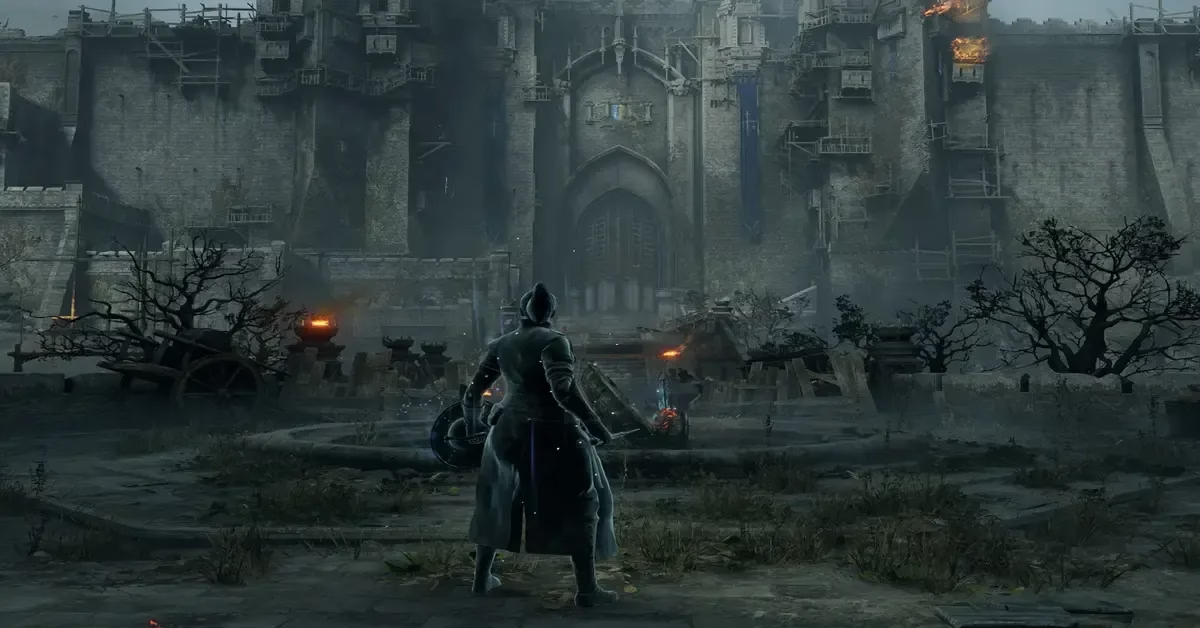
The sparse dialogue with NPCs provides breadcrumbs, never full meals. You're left to piece together the narrative yourself, interpreting item descriptions, environmental clues, and cryptic conversations. This approach was revolutionary – most games in 2011 held your hand through every plot point. Dark Souls threw you into the deep end and said, "Figure it out."
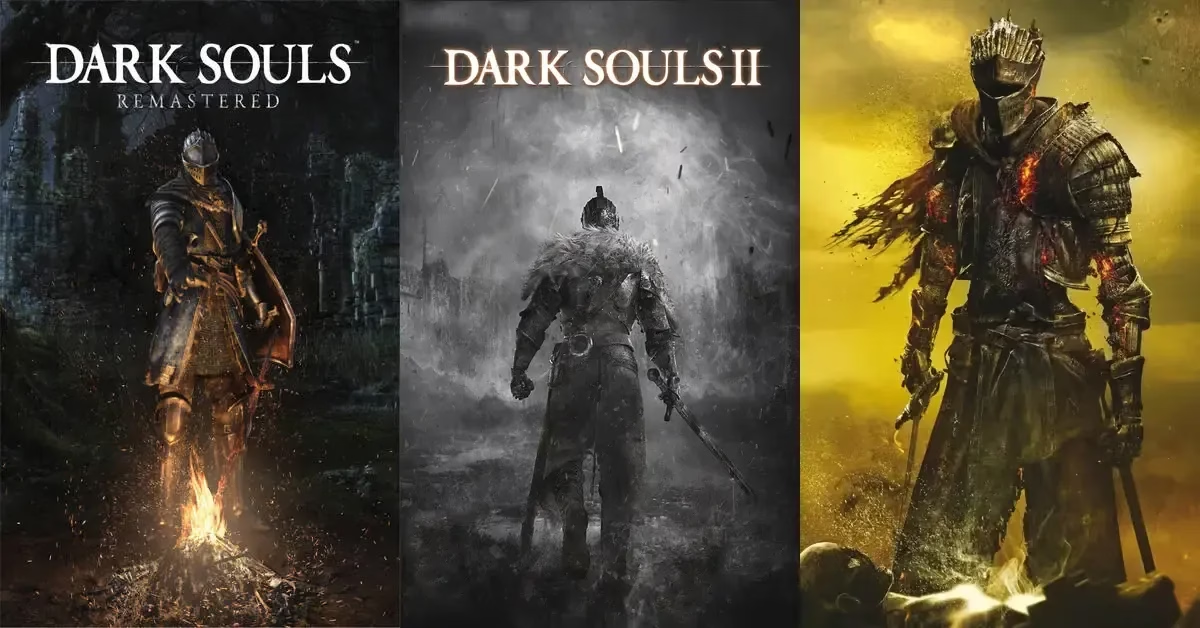
Initially, players were skeptical. Many dismissed it as "too difficult" after their first attempts. But skepticism transformed into recognition as players realized something profound: every challenge could be overcome. This revelation sparked a phenomenon. Dark Souls II followed in 2012, then Dark Souls III in 2016. FromSoftware would go on to create other celebrated Souls-like experiences such as Bloodborne and Elden Ring, but today we're focusing on where it all began.
The Beautiful Brutality of Souls Mechanics
Let me be honest with you – the game mechanics are what make Dark Souls special, not just the lore or atmosphere. These games are significantly harder than most mainstream titles. Every fight can be lethal, and boss battles can push you to the edge of sanity. While there are no official statistics on controllers destroyed in fits of Souls-induced rage, I'd wager the number is substantial.
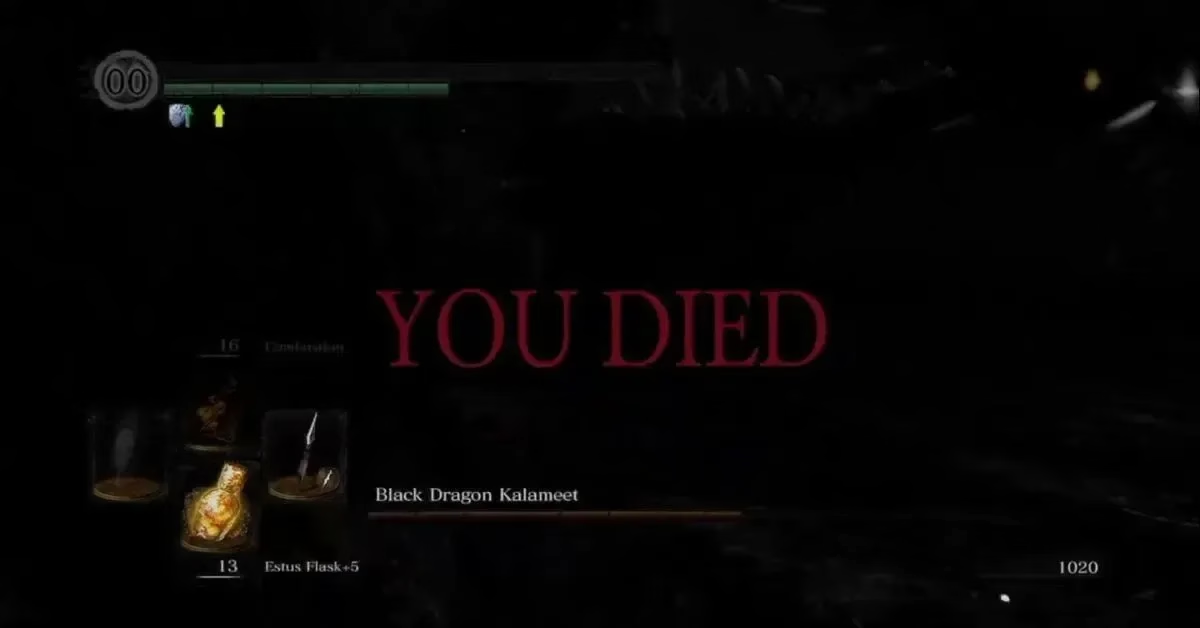
There's nothing quite like spending hours on a boss, getting them down to a sliver of health, only to make one mistake and watch your character crumple to the ground. Again.
But here's the central truth that makes it all work: you are immortal, and you have infinite attempts. The bosses are stronger than you, yes. But they're predictable. They can't learn. You can. Once this clicks in your mind, everything changes. You realize you can beat any boss – it might take twenty tries, or fifty, or a hundred, but you'll get there.
The game punishes mistakes harshly. Death means:
-
Losing your collected souls
-
Respawning at the last bonfire
-
Walking all the way back to the boss
That long walk back becomes its own motivator. You think, "I am NOT walking back here again," and somehow, that determination sharpens your focus.
Progression and Power
Of course, you can make things easier on yourself. Defeating enemies earns you souls, which you can spend to level up your character. You can improve various stats:
| Stat | Effect |
|---|---|
| Dexterity | Improves weapon handling and speed |
| Strength | Increases physical damage |
| Health | Expands your HP pool |
| Stamina | Allows more actions before exhaustion |
| Magic/Intelligence | Enhances spellcasting abilities |
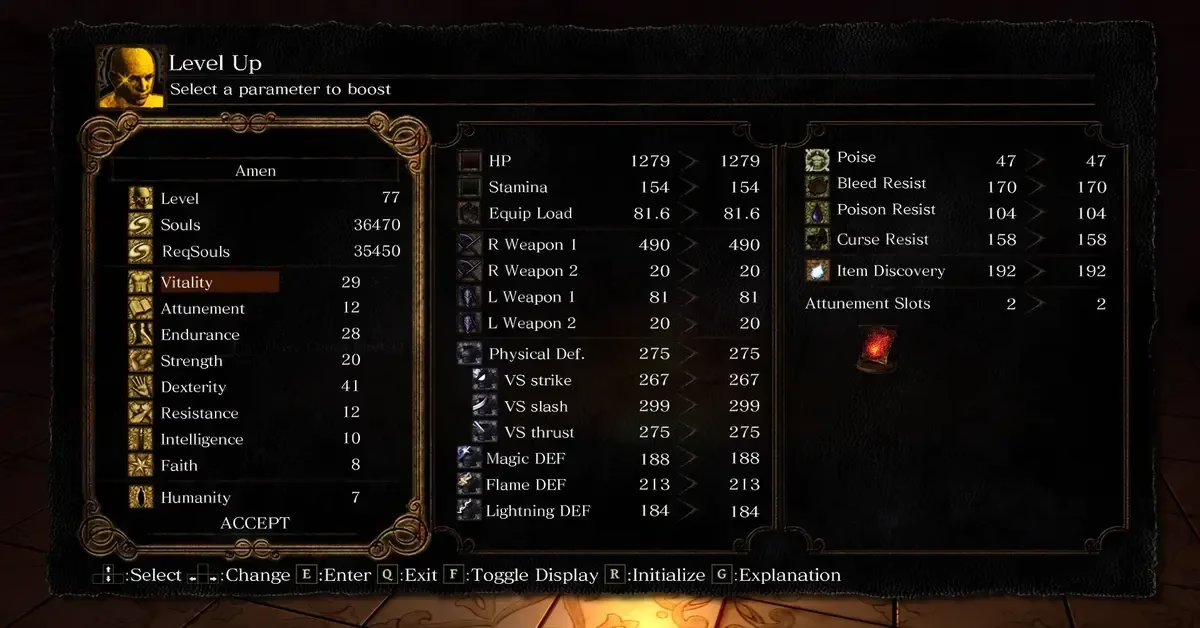
Weapons can be upgraded using smithing stones, increasing their damage output. These progression systems don't make the game easy, but they provide that crucial sense of advancement that keeps you pushing forward.
A Seamless World of Interconnected Secrets
The world design in Dark Souls is like an intricate pocket watch – everything connects, gears within gears, no wasted space. The entire game world is seamlessly connected without loading screens. Different areas host different enemy types, but everything exists in a compact, masterfully designed space.
Some bosses mark the end of an area, while defeating others opens entirely new regions to explore. Exploration feels rewarding because secrets hide around every corner – hidden pathways, powerful items, shortcuts that loop back to earlier areas. It's the kind of design that makes you think, "I wonder what's down there?" and then rewards your curiosity.
The Unique Multiplayer Experience
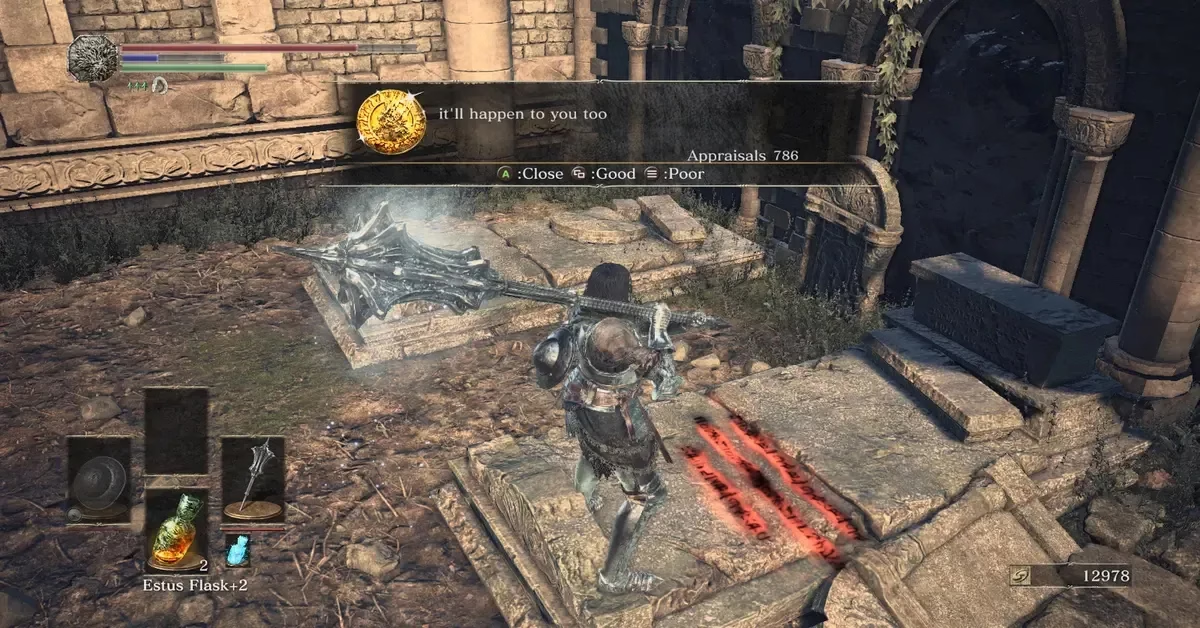
Dark Souls' multiplayer system is unlike anything else. In single-player mode, you'll find messages left by other players scattered throughout the world. These can be:
-
🎯 Genuinely helpful tips ("Try jumping")
-
😈 Elaborate trolls ("Treasure ahead" in front of a cliff)
-
😂 Community inside jokes
You can summon allies to help with difficult sections or boss fights, but they vanish once the boss falls, so true cooperative play isn't possible in the traditional sense.
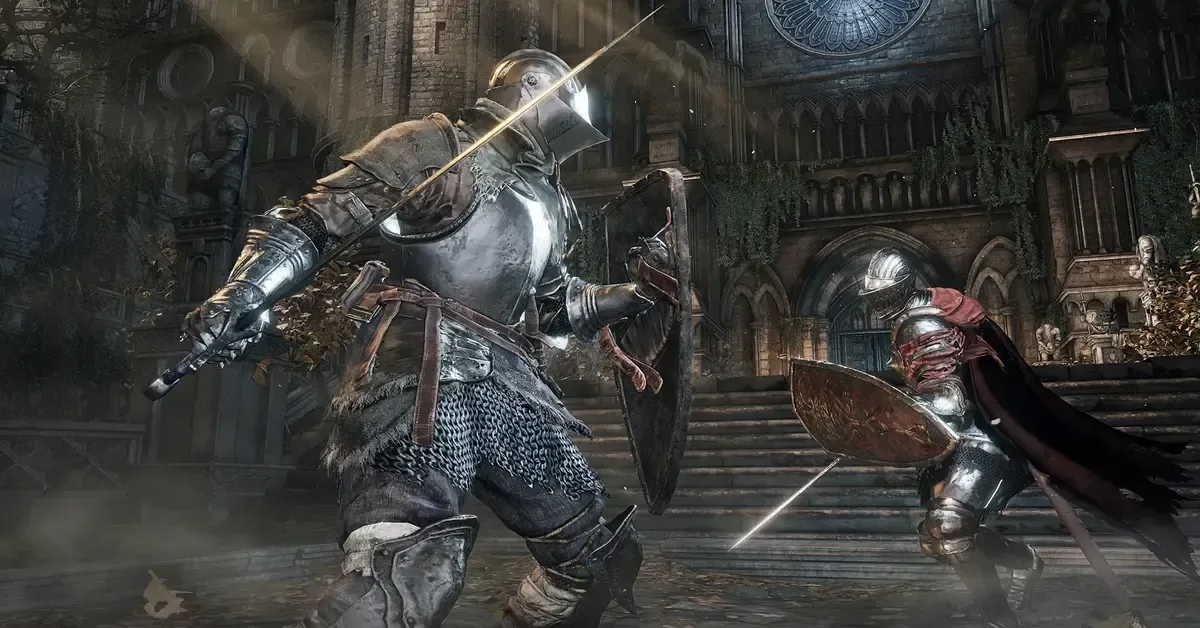
PvP arenas allow you to test your skills against other players. Fair warning though – many PvP veterans have been playing since 2011 and will absolutely destroy newcomers. Fighting against friends, however, is incredibly fun.
As for the story, it exists, but following it requires dedication. Many players turn to YouTube videos and online guides to understand the chronological narrative, piecing together the fragments Miyazaki scattered throughout the game world.
How Dark Souls Changed Gaming Forever
Since Dark Souls launched in 2011, the gaming industry has never been quite the same. The game completely redefined the action RPG genre, spawning the entire "Souls-like" subgenre. These games share common DNA:
✅ Extremely challenging gameplay
✅ Deep, skill-based combat systems
✅ Resource-based leveling (usually souls or similar currency)
✅ Punishing but fair difficulty
✅ Environmental storytelling
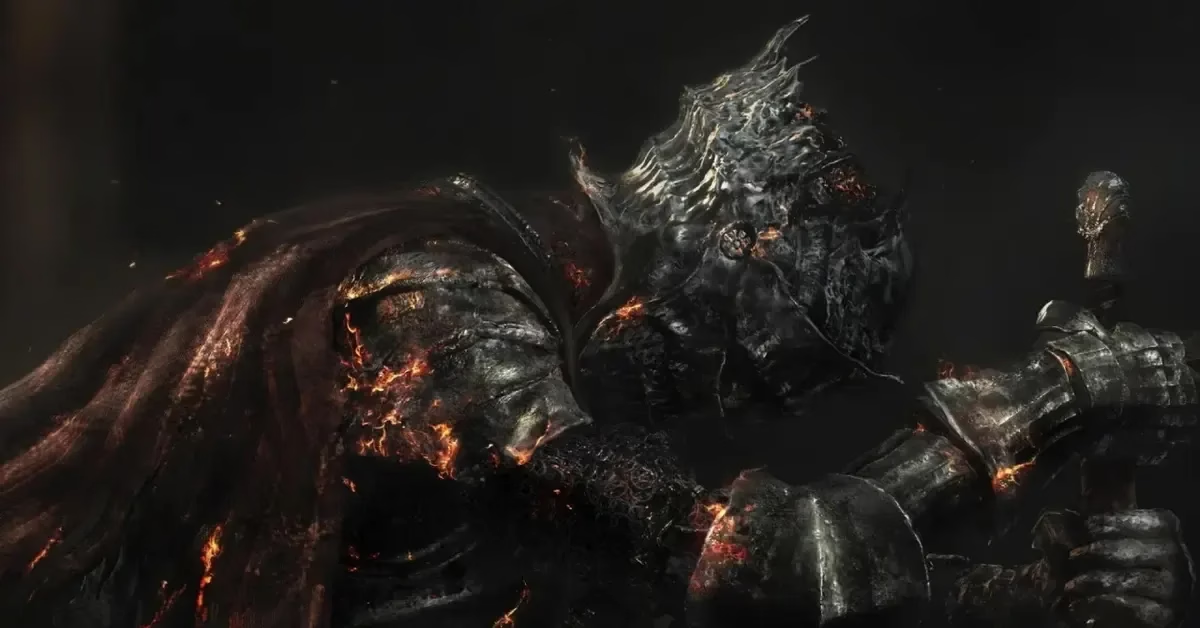
Dark Souls fundamentally changed perceptions about difficulty and storytelling in games. Before 2011, dying 100+ times in a single playthrough was considered poor game design. The idea that players might enjoy deciphering a fragmented narrative was radical. Yet people absolutely love it, which is why the market has been flooded with Souls-like games ever since.
The asynchronous multiplayer design has influenced other games too. Death Stranding adopted a similar system where players leave helpful structures and messages for others without directly playing together. It's like leaving footprints in wet concrete – a way to connect with other players across time.
A Community Built on Shared Suffering
Dark Souls lives because of its community. Thousands of players engage with these games daily, and their creativity has only grown over time. The community has created:
Speedruns
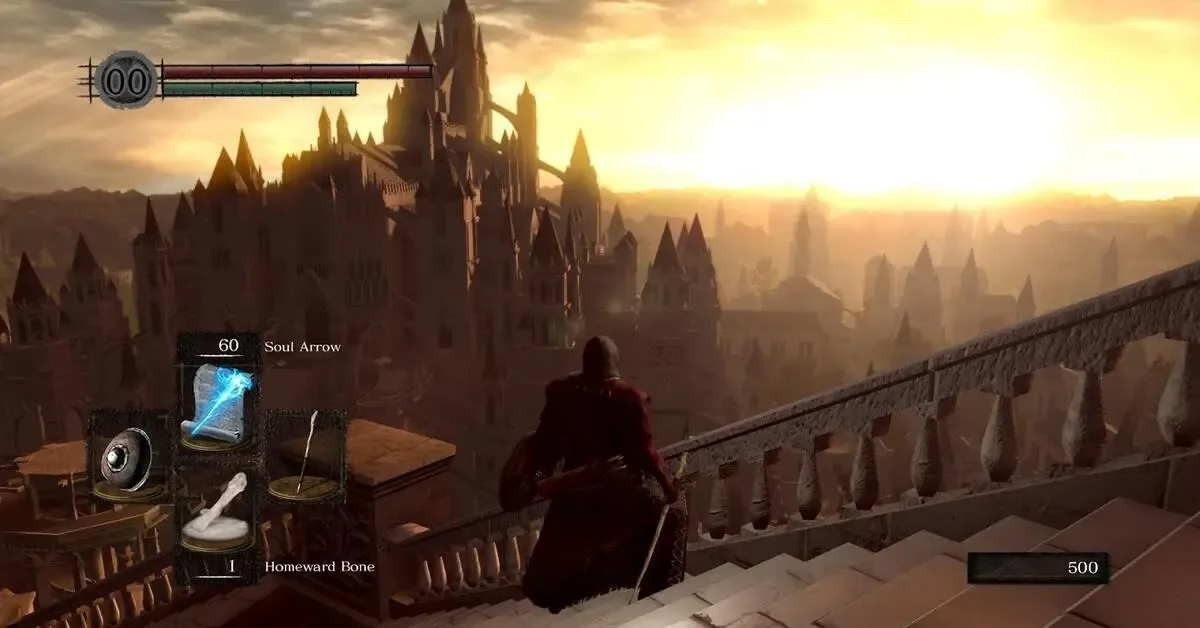
Players compete to complete the games as fast as possible, exploiting every skip, glitch, and shortcut.
God Runs
An entirely different beast – completing all Souls games back-to-back without taking a single hit. One point of damage means starting completely over. It's like walking a tightrope across the Grand Canyon without a safety net.
Creative Challenges
The community's creativity knows no bounds. Players have beaten Dark Souls using:
-
🕺 Dance mats
-
🎹 Piano controllers
-
🎮 Two devices simultaneously (dance mat + controller)
-
🍌 Banana controllers
-
🎤 Voice commands
Streamers and YouTubers constantly push the boundaries with new challenge runs. The question isn't "Can Dark Souls be beaten?" but rather "What's the most absurd way we can beat Dark Souls?"
Countless guides exist to help newcomers navigate the intricate world, offering tips on where to go and what to do. The Souls community is remarkably active and welcoming, eager to share their experiences and help new players overcome challenges.
More Than Just a Game
Dark Souls is more than a video game – it's a cultural touchstone that altered gaming's trajectory. What would have happened if Miyazaki hadn't played Ico? What if he'd stayed at Oracle? These coincidences led to something remarkable: a challenging yet beautiful game that launched the entire Souls-like era.
The seamless level design inspired countless developers to create interconnected worlds where discovery feels meaningful. Even in relatively compact spaces, Dark Souls manages to pack diverse environments that feel distinct and purposeful. The minimal but impactful multiplayer system influenced games far beyond the action RPG genre.
But perhaps most importantly, the passionate community transformed Dark Souls from a game into a phenomenon. Years of creative challenges, funny videos, helpful guides, and shared experiences brought new players into the fold. Each new player discovered what veterans already knew – beneath the difficulty lies one of gaming's most rewarding experiences.
Your Journey Awaits
If you're feeling inspired to dive into Dark Souls or explore other Souls-like games, remember this: every master was once a beginner who refused to give up. That first boss that seems impossible? You'll beat it. That area that keeps killing you? You'll learn its secrets. The journey from fumbling novice to confident warrior is what makes these games special.
The beauty of Dark Souls isn't just in overcoming challenges – it's in discovering you're capable of more than you thought. It's about persistence, pattern recognition, and that incredible rush when everything clicks and you finally defeat that boss who's been tormenting you for hours.
So grab your controller (and maybe keep a spare handy), light that first bonfire, and prepare to die. A lot. But also prepare to experience one of gaming's most unique and rewarding adventures. The road ahead is dark, but the souls you'll collect along the way – both literal and metaphorical – make every death worthwhile.
Praise the sun! ☀️
If you want to experience this masterpiece for yourself, you can Buy Dark Souls II: Scholar of the First Sin CD Key on DealNest — currently 75% off at just $10.02.