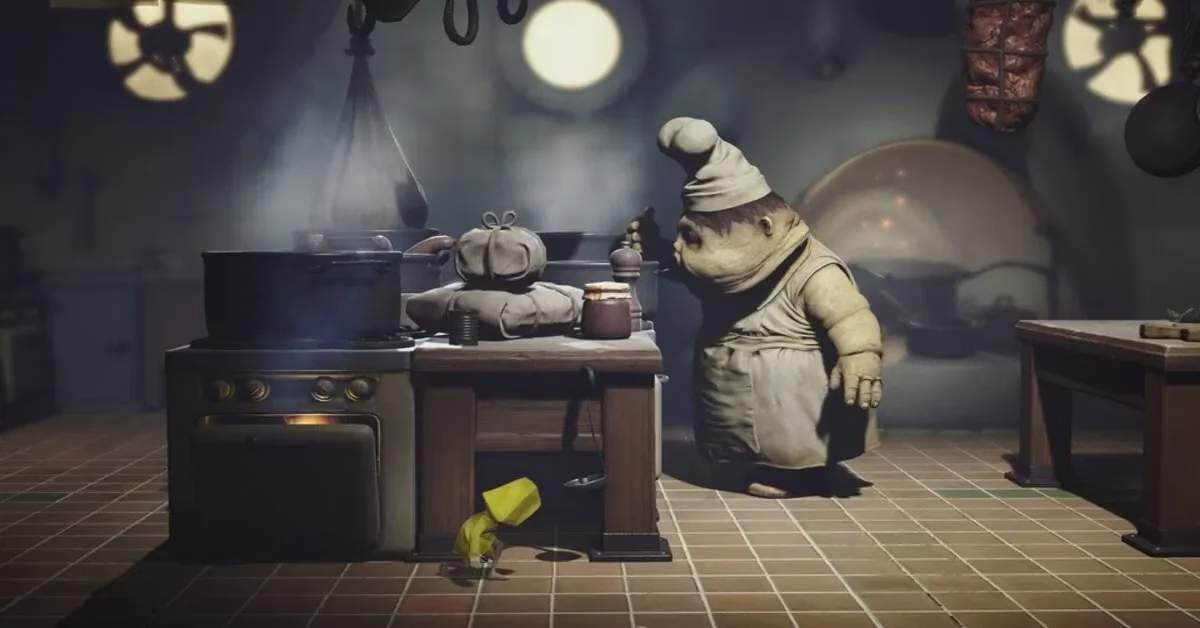
I've been following the Little Nightmares franchise since its debut in 2017, and watching it evolve over these past eight years has been like observing a child's drawing slowly transform into a full nightmare – equal parts fascinating and unsettling. With three games now under its belt, this series has carved out a unique space in horror gaming by blending innocent childhood imagery with deeply disturbing aesthetics and clever platforming puzzles.
The Birth of a Nightmare – Where It All Began
When Swedish studio Tarsier Studios first released Little Nightmares in 2017, published by Bandai Namco Entertainment, they weren't just creating another horror game. They were crafting an experience that exists "in a distorted place between dream and reality, where children face the horrors of the world alone." I remember first playing as Six, the tiny raincoat-clad protagonist trapped in The Maw – a massive underwater facility that felt like a twisted funhouse designed by someone's darkest fears.
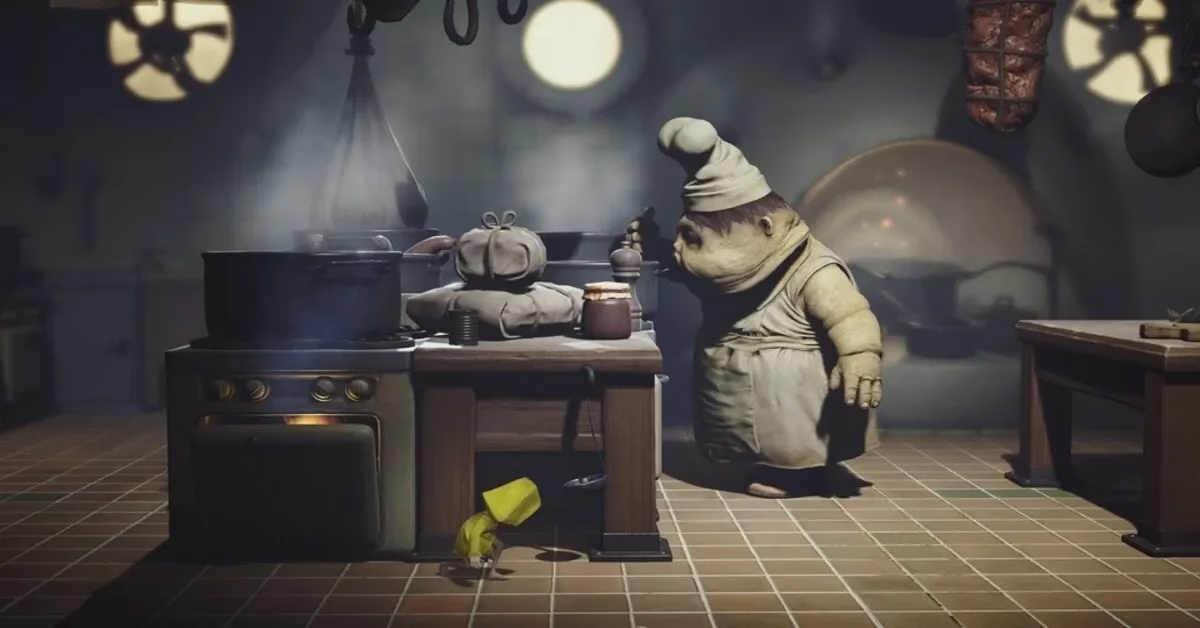
What struck me immediately was how the game made me feel. The developers understood that horror isn't always about jump scares or gore. Sometimes, it's about feeling incredibly small in a world that seems designed to crush you. The oversized furniture, the distorted monsters, the minimal dialogue – everything worked together like a discordant symphony playing just for me. 🎭
The gameplay itself was deceptively simple: platforming and puzzle-solving with almost no combat abilities. Instead, I relied on stealth and quick thinking, hiding behind everyday objects that towered over Six like skyscrapers. The game explored themes of childhood vulnerability, insatiable hunger, and loss of control through pure visual storytelling and symbolism.
Growing Pains – Little Nightmares II
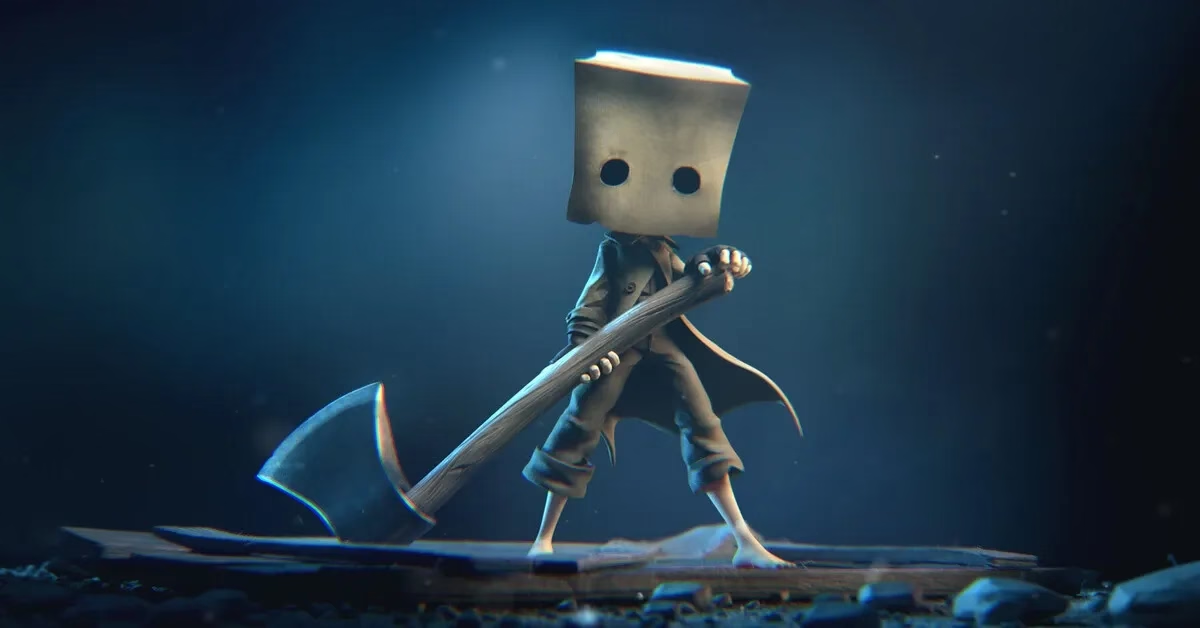
Fast forward to February 11, 2021, and Tarsier Studios gave us Little Nightmares II. This time, I played as Mono, a boy hiding his face behind a brown paper bag, accompanied by Six (now AI-controlled). The dynamic shifted entirely – like moving from a solo performance to a haunting duet.
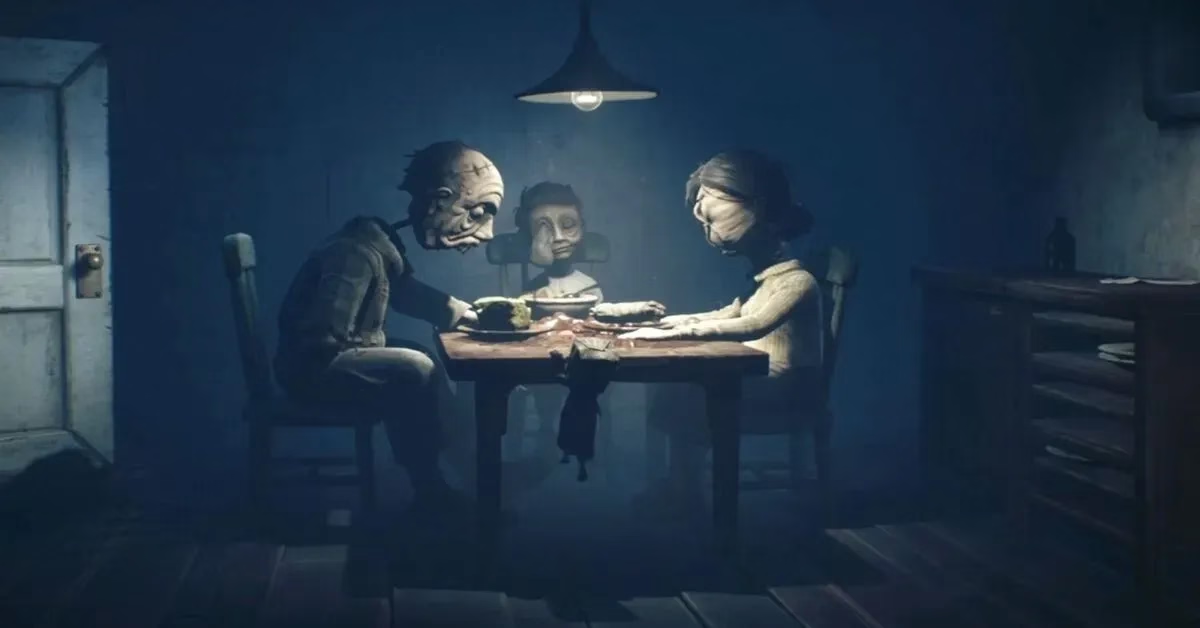
The sequel expanded everything. The environments became more diverse – schools, hospitals, and TV-dominated spaces all transformed into horror settings. I particularly remember those monotonous TV screens showing distorted children's faces, creating an atmosphere that felt like watching your childhood memories decay in real-time. 📺
Mono could now pick up objects and fight smaller enemies, which changed the gameplay dynamic significantly. Six assisted with puzzles, creating a unique blend of helplessness and connection that I hadn't experienced in the first game. The Signal Tower and Pale City added layers to the lore, though reviews were mixed. While the atmosphere and visuals received praise, some critics felt the combat mechanics diluted the original's pure stealth concept.
The numbers told their own story – over one million copies sold within a month. The franchise had grown from a cult favorite into a mainstream phenomenon.
Changing Hands – The Supermassive Takeover
When I heard that Supermassive Games (known for the Dark Pictures series) would develop Little Nightmares III instead of Tarsier Studios, I felt both excitement and apprehension. A developer change is like switching conductors mid-symphony – it can either elevate the performance or throw everything off-key.
Originally announced for 2024, the game was delayed to 2025 to ensure quality. The community had clear expectations: online co-op (since the previous game already featured two characters), larger interconnected worlds, and most importantly, preservation of the series' core identity.
The Latest Chapter – Little Nightmares III
Released on October 10, 2025, across PlayStation 5, PlayStation 4, Xbox Series, Xbox One, Nintendo Switch 2, Nintendo Switch, and PC, Little Nightmares III introduced two new protagonists: Low and Alone. For the first time, the series featured true online co-op with a free Friends Pass for the second player.
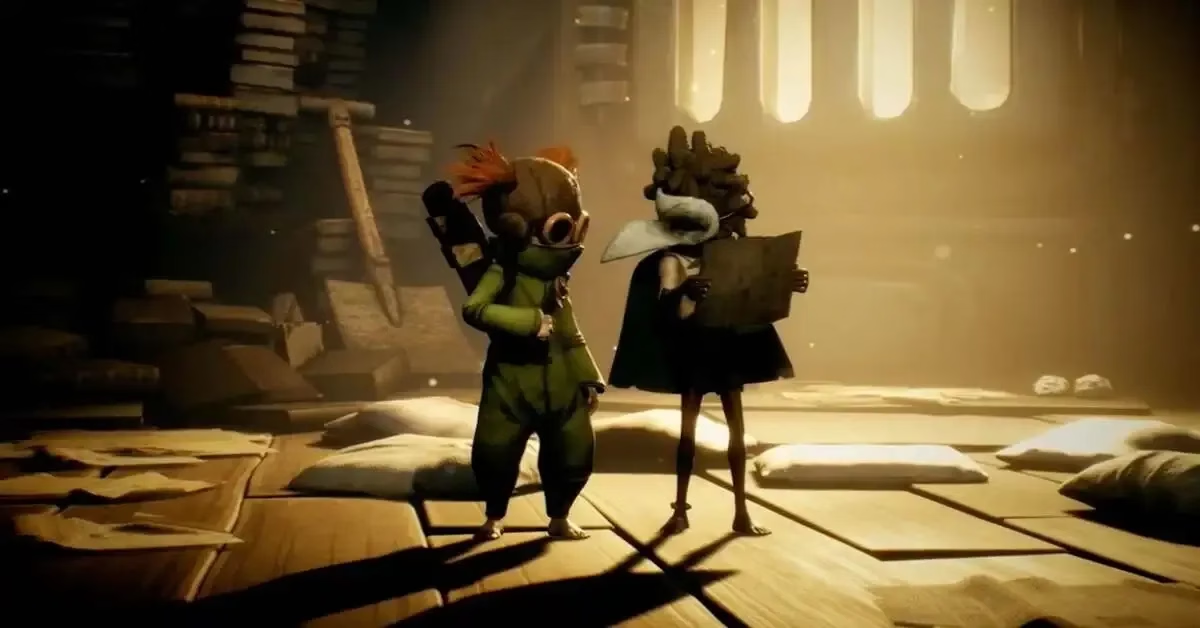
The game gave each character unique tools – Low's bow and Alone's wrench – designed primarily for puzzle-solving. The bow could cut ropes and trigger mechanisms, while the wrench served its own purposes. The world, known as The Nowhere or The Spiral, expanded significantly with more diverse environments and branching level structures.
What Worked and What Didn't ✅❌
The stylistic core remained intact: small, vulnerable characters in an oppressive giant world, minimal text, strong visual storytelling, and that signature blend of childlike imagery with nightmare fuel. However, the reception has been rocky.
On Steam, approximately a week after release, only 46% of reviews were positive. The criticism focused on:
-
Incomplete story feeling
-
Insufficient content
-
Lukewarm soundtrack reception
-
Unwelcome graphical style shifts
-
Excessive DLC offerings
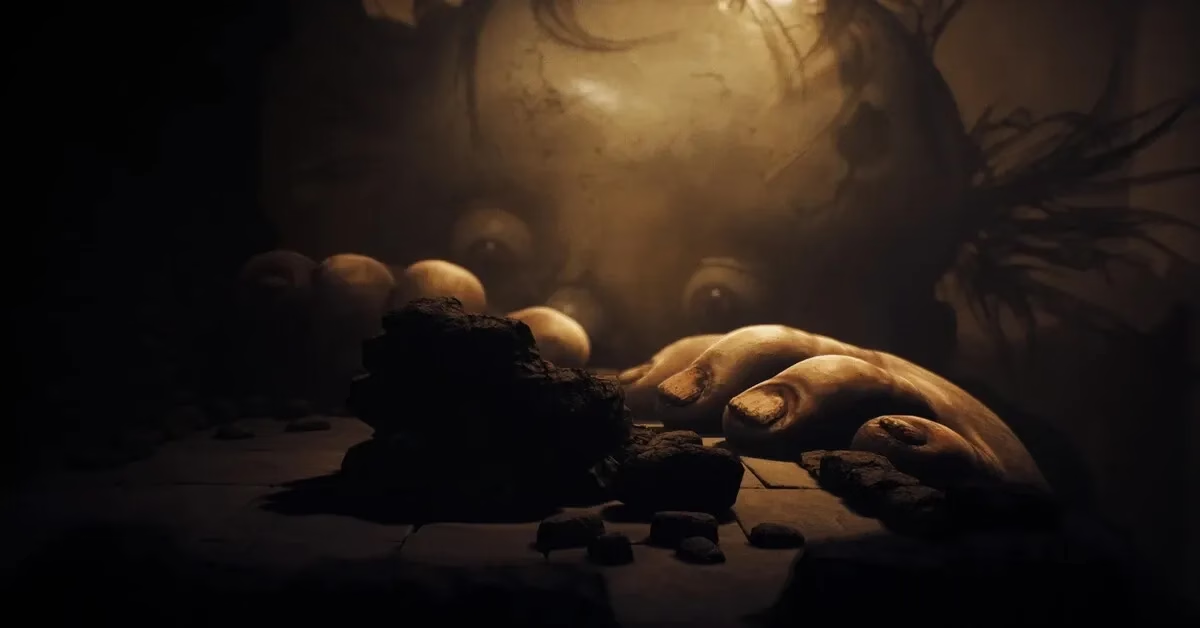
Many players, myself included, felt that while the game showed ambition in expanding the formula, it stumbled in execution. It's like watching a talented artist switch from watercolors to oils – the potential is there, but the technique needs refinement.
Where Do We Go From Here? 🔮
Little Nightmares III represents a crossroads for the franchise. The shift to co-op gameplay and dual protagonists in a larger world shows willingness to evolve, but the mixed reception proves that evolution doesn't always equal improvement.
Here's what the series' future could hold:
| Possibility | Impact |
|---|---|
| Supermassive Games develops Part IV with lessons learned | Potential redemption and refinement of new mechanics |
| Tarsier Studios returns for future installment | Back to roots approach, possibly sacrificing innovations |
| Series goes on hiatus for reassessment | Time to analyze feedback and plan strategically |
| Franchise concludes with Part III | Preserving legacy rather than risking further damage |
The franchise has proven it can create unforgettable atmospheres that stick with players long after they've put down the controller. That first game's oppressive mood, the second game's expanded universe, and the third game's ambitious co-op attempt all demonstrate a series willing to take risks.
The Nightmare Continues (Maybe)
After eight years, Little Nightmares has grown from a small, stylistically unique horror project into a recognized brand occupying a distinct niche. It's a series that makes you feel like a mouse in a house of giants, where every piece of furniture could be your doom and every shadow hides something worse.
The first game impressed with minimalist storytelling and crushing atmosphere. The second significantly expanded the universe while sparking debate about mechanical changes. The third took bold steps forward – perhaps too bold, too fast – resulting in a stumbling block that the developers can hopefully learn from.
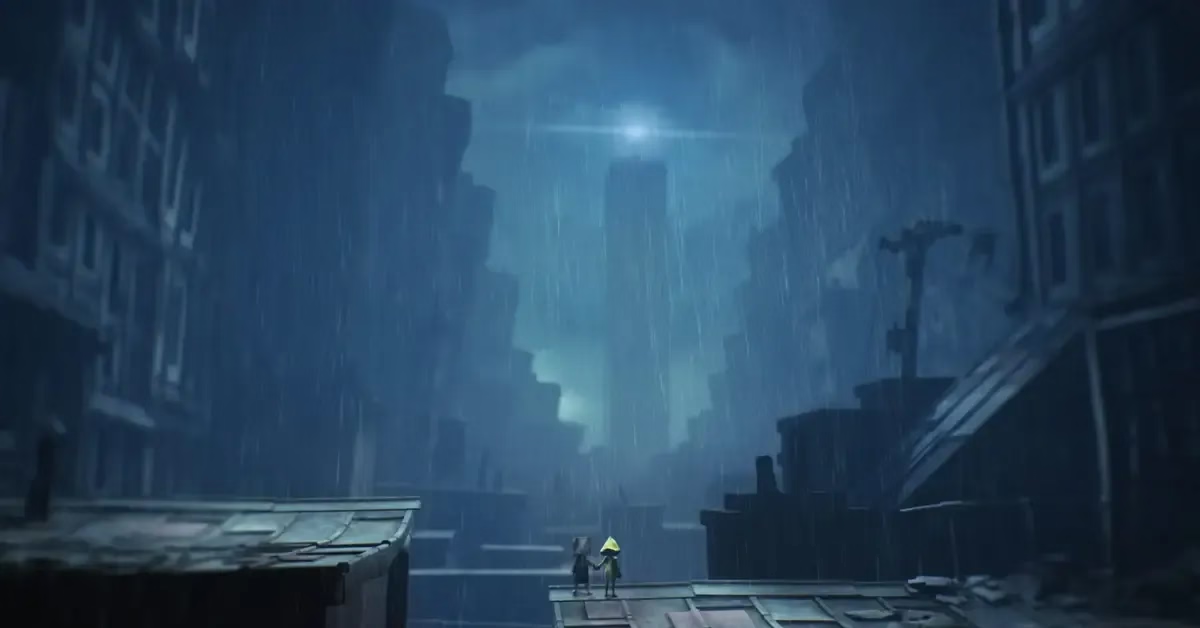
Despite Little Nightmares III's weaknesses – the criticized story incompleteness, content concerns, and questionable DLC strategy – the series' potential remains undeniable. Whether with Supermassive Games refining their approach or Tarsier Studios potentially returning, the future of these nightmares remains uncertain but undeniably exciting.
What's clear is that Little Nightmares has left an indelible mark on horror gaming. It showed us that terror doesn't need to be loud or bloody – sometimes, the most frightening thing is simply being small in a world that doesn't care about your existence. And that's a nightmare worth revisiting, provided the next installment remembers what made us afraid in the first place. 🌙
If you're ready to revisit the original, Compare Little Nightmares prices on DealNest, where it's currently 82% off at $3.70.