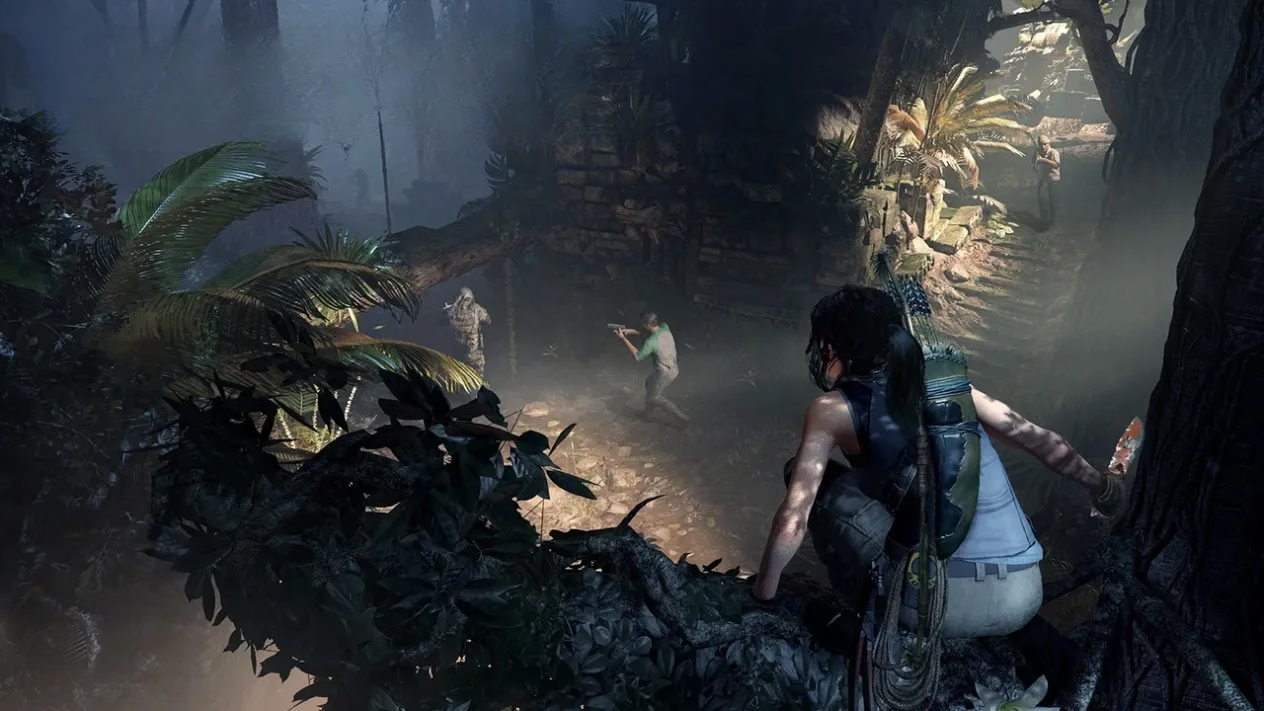
I remember sitting at my desk, just days before the game's release, scrolling through review after review. As someone who'd followed Lara Croft's rebooted journey since 2013, I was desperate to know: would this final chapter stick the landing? The anticipation was almost unbearable, and the critics' voices were starting to create a chorus of mixed emotions in my head.
What Made My Heart Sing 🎵
When I dove into the reviews, one thing became crystal clear: the tombs were back, and they were glorious. I'd always felt the modern Tomb Raider games leaned too heavily on combat, turning what should be an archaeological adventure into a shooting gallery. But this time? This time felt different.
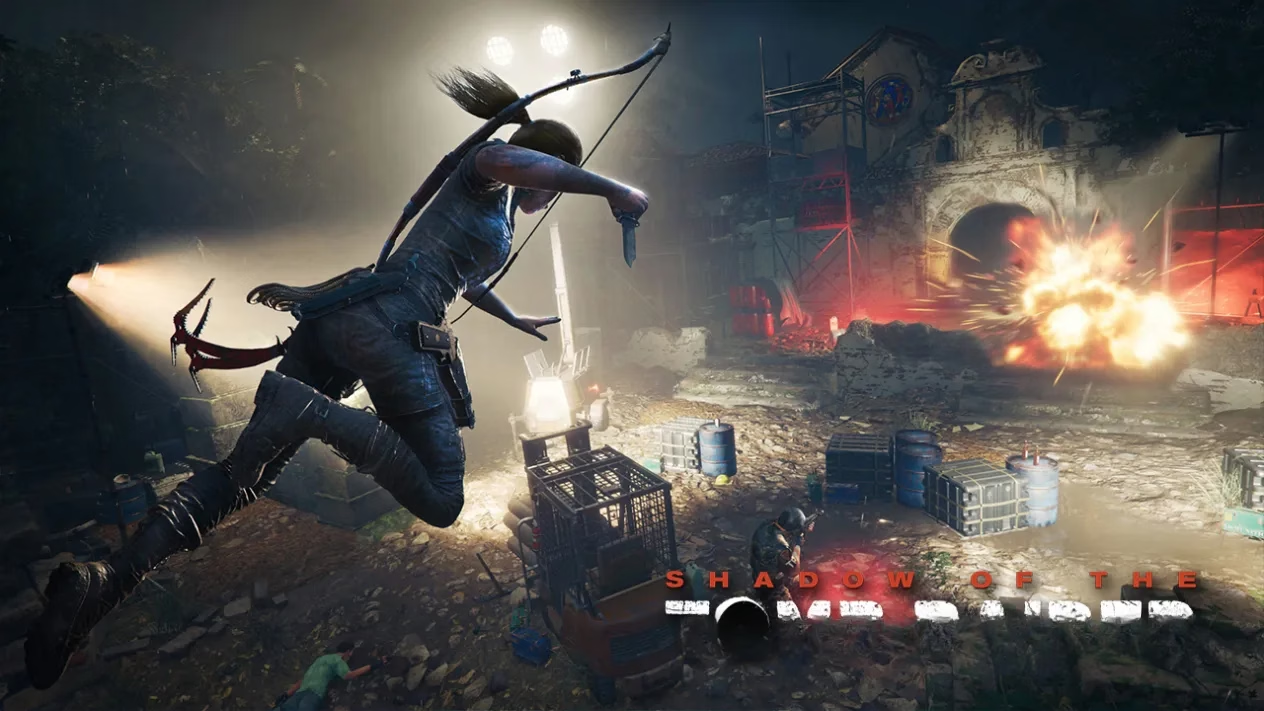
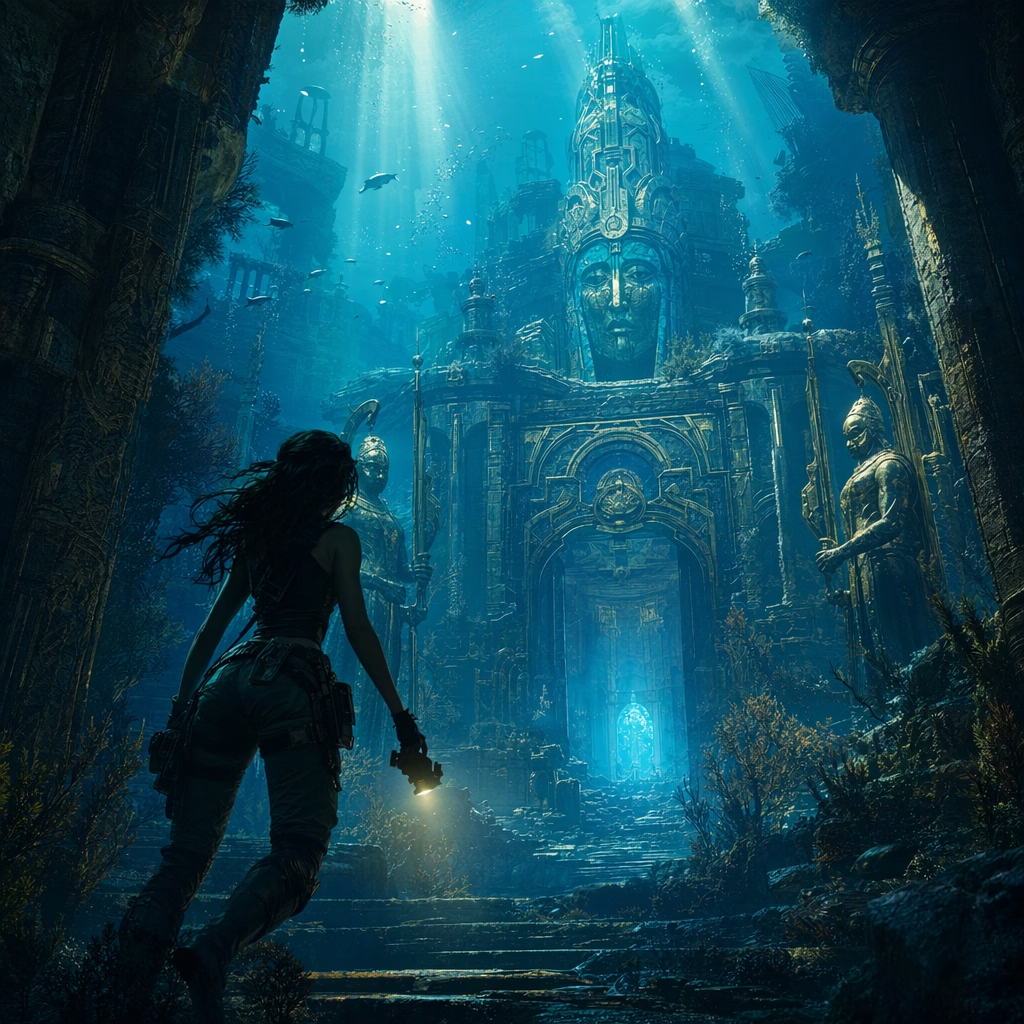
The restraint shown in Shadow genuinely impressed me. Instead of throwing endless waves of enemies at players, the developers focused on what made me fall in love with Tomb Raider in the first place—actually raiding tombs. The puzzle-based challenge tombs weren't just side content; they were the star of the show, some of the best the series had ever offered.
I found myself nodding along as I read about the game's platforming and setpieces. These elements had always been where the series shined brightest, and knowing that Shadow doubled down on them made my gaming heart flutter. The camera work, perfectly framing those thrilling moments, promised an experience that would feel like the most polished Tomb Raider yet.
The Story That Brought Everything Full Circle 📖
What really got me excited was learning how the narrative wrapped up Lara's origin story. The developers managed something tricky—balancing high-concept adventure fun with grounded character exploration. I'd invested years following this version of Lara, watching her transform from a frightened survivor into the confident adventurer we all knew she'd become.
The fact that the story satisfactorily concluded her journey while leaving her in a place resembling the classic Lara Croft I grew up with? That was meaningful to me. It felt like coming home after a long, transformative journey.
Key Strengths I Noticed:
-
Exceptional tomb design and puzzle mechanics
-
Reduced combat focus in favor of exploration
-
Beautiful environments that begged to be explored
-
Satisfying narrative conclusion to the trilogy
-
Outstanding platforming and traversal mechanics
The Cracks in the Ancient Ruins 🏺
But as I continued reading, I couldn't ignore the concerns that kept surfacing. The core mechanics, which had served the series well for half a decade, were showing their age. I understood what the critics meant—sometimes familiarity breeds not comfort, but fatigue.
Several reviewers mentioned feeling like something was missing. Whether it was a more engaging skill system or a bigger map, there was this sense of unrealized potential hanging over the experience. I could relate to that feeling from other games I'd played, where you enjoy yourself but can't shake the nagging sensation that it could have been more.
The repetition worried me too. As someone who values innovation, hearing that Shadow didn't bring many new ideas to the table was disappointing. This was supposed to be the grand finale, the high note that sent Lara's origin story off in style. Instead, it seemed to play it safe.
My Personal Takeaway 🎮
Reading through all these reviews, I realized something important: Shadow of the Tomb Raider was exactly what it wanted to be, for better or worse. It knew its strengths and played to them while trying to minimize its weaknesses. That's admirable in its own way, even if it didn't push boundaries.
For someone like me who'd enjoyed the first two games, this felt like a natural conclusion. Would it blow my mind with revolutionary gameplay? Probably not. But would it deliver a well-crafted, polished experience with some genuinely wonderful moments? The evidence suggested yes.
| Aspect | Rating Impression |
|---|---|
| Tomb Design | ⭐⭐⭐⭐⭐ Excellent |
| Story | ⭐⭐⭐⭐ Strong |
| Innovation | ⭐⭐⭐ Adequate |
| Polish | ⭐⭐⭐⭐⭐ Outstanding |
| Combat | ⭐⭐⭐ Improved by reduction |
The Final Verdict in My Mind 💭
As launch day approached, I found myself at peace with what Shadow of the Tomb Raider represented. This wasn't going to revolutionize gaming or redefine the series. Instead, it was a love letter to what made these rebooted games work—stunning environments, clever puzzles, breathtaking setpieces, and a protagonist whose journey we'd followed for years.
The polarizing reviews didn't scare me off. If anything, they helped me calibrate my expectations. I wasn't walking into this expecting perfection; I was walking in expecting a satisfying conclusion to a story I'd invested in, wrapped in the familiar but refined gameplay I'd grown to appreciate.
Yes, the game might ring hollow in places. Yes, it might not innovate as much as I'd hoped. But when those quieter moments hit, when I'd be alone in ancient ruins solving centuries-old puzzles with nothing but my wits and determination? That's when I knew this game would render me wide-eyed with wonder.
And honestly, for this chapter of Lara's story, that felt like enough. 🏹
If you're ready to jump back into the jungle, you can Buy Shadow of the Tomb Raider CD Key at an amazing deal—currently just $3.49 (87% off) on DealNest.