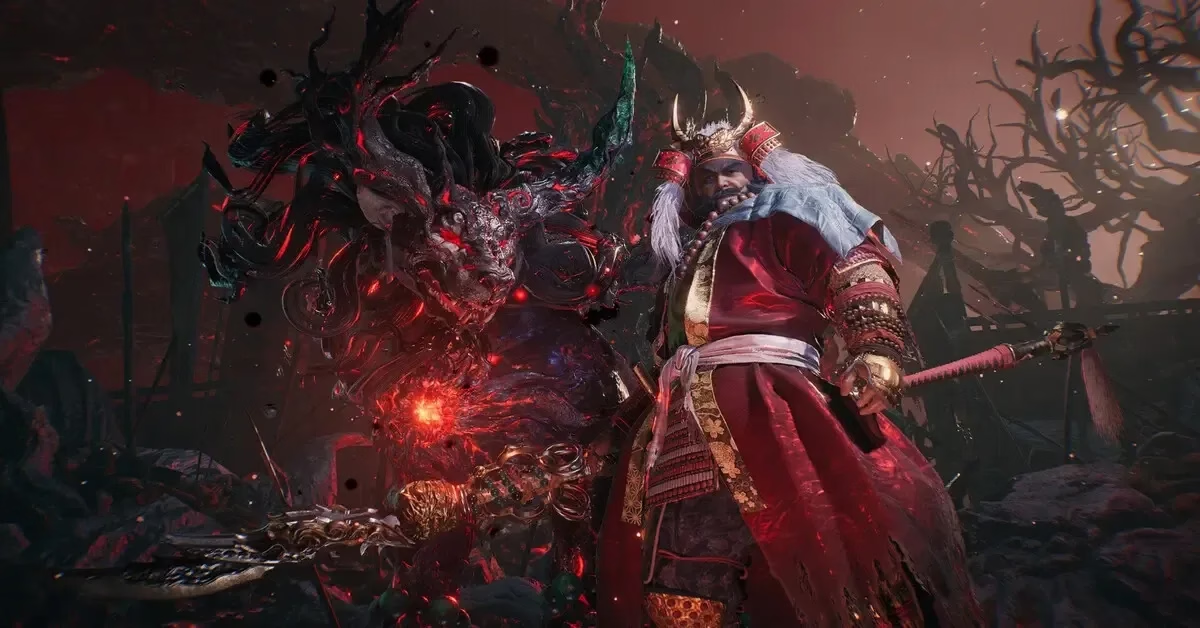
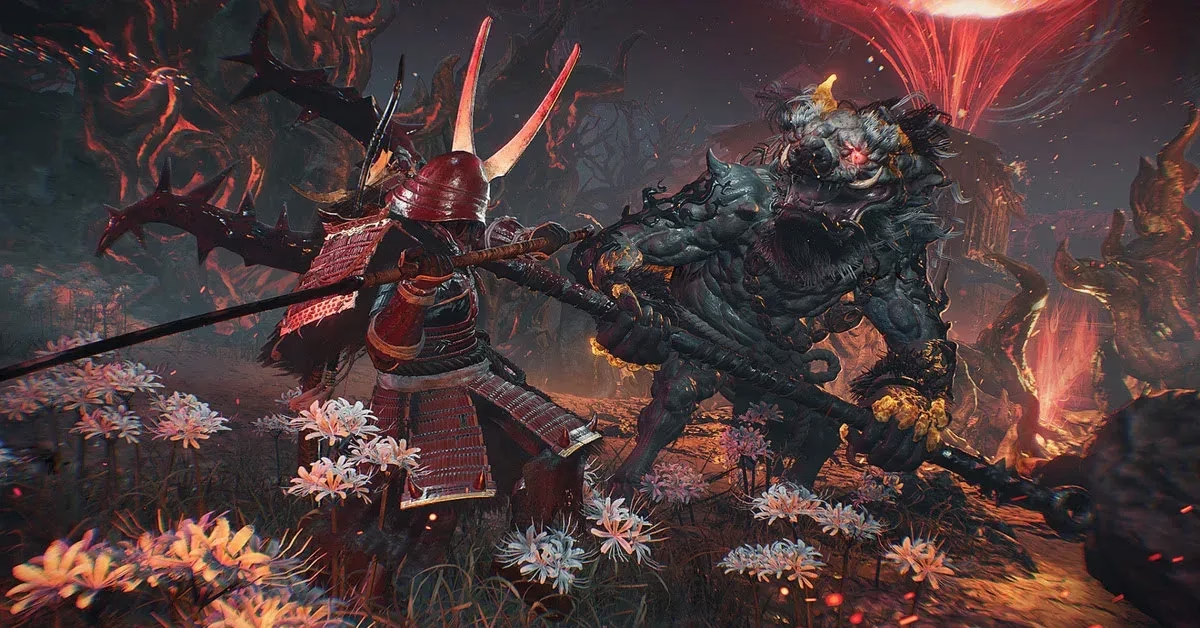
When Team Ninja decided to venture beyond their Ninja Gaiden roots, few could have predicted they'd create one of the most distinctive action-RPG franchises in gaming. The Nioh series represents a bold fusion of lightning-fast combat, deep RPG mechanics, and Japan's rich mythological heritage. But what makes these games stand apart in an increasingly crowded Soulslike market?
From Ninja Gaiden to a New Identity
Team Ninja's journey to creating Nioh wasn't straightforward. The studio had built its reputation on the brutally demanding Ninja Gaiden series—games that required split-second reflexes and rewarded aggressive, combo-heavy gameplay. When Nioh was first conceptualized in the mid-2000s, it began life as a historical samurai game without a clear direction.
The project languished through multiple restarts and creative pivots. Then Dark Souls arrived and changed everything. Rather than simply copying FromSoftware's formula, Team Ninja saw an opportunity to blend stamina-based combat with their signature high-speed action philosophy. Could they create something that appealed to both hardcore action fans and Souls enthusiasts? The answer would take until February 2017 to arrive.
The First Nioh: A Bold Western Perspective
When Nioh launched on PlayStation 4 in 2017, it made an unusual choice—casting William Adams, an English navigator, as its protagonist. This wasn't random: Adams was a real historical figure, the first Englishman to reach Japan and earn the title of samurai. This outsider's perspective served dual purposes: it provided a natural entry point for Western audiences while maintaining historical authenticity.
The game introduced Ki as its central mechanical innovation. Unlike the straightforward stamina systems in other Soulslikes, Ki demanded constant active management:
-
Required for attacks, blocks, dodges, and special abilities
-
Could be recovered mid-combat through Ki Pulse timing
-
Created rhythm-based combat flow
-
Rewarded aggressive, offensive playstyles
Instead of an open world, Team Ninja opted for mission-based structure. This design philosophy allowed for:
| Design Choice | Benefit |
|---|---|
| Focused areas | Targeted difficulty balancing |
| Mission variety | Multiple gameplay scenarios |
| Side quests | Extended replay value |
| Recycled zones | Different tactical challenges |
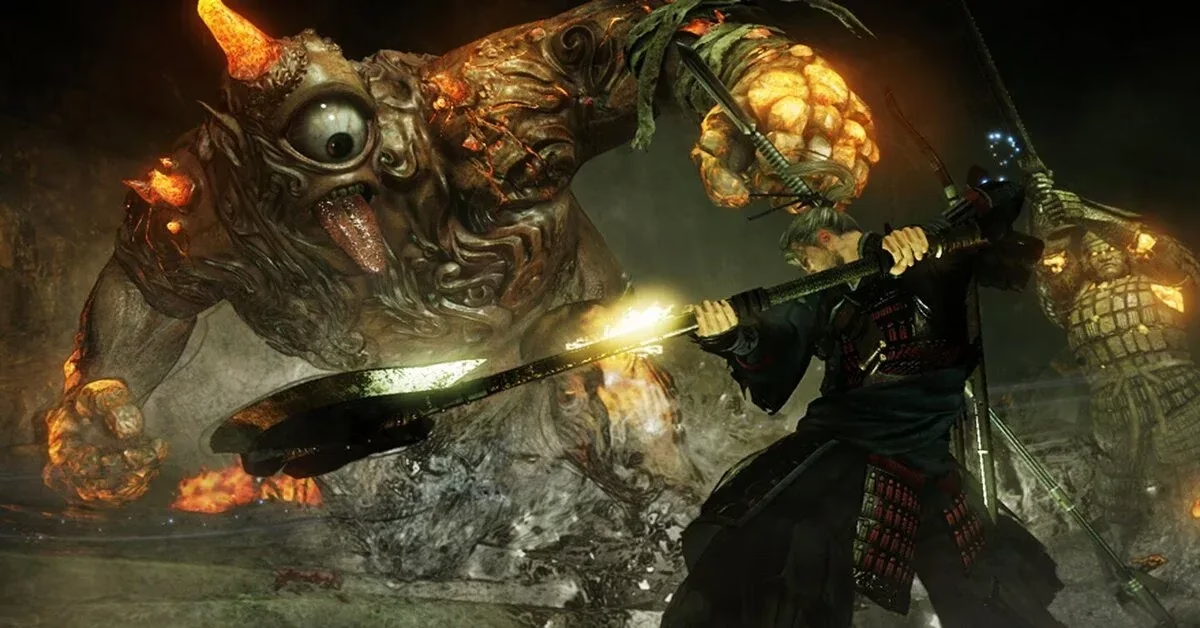
The Stance System: Combat Redefined
What truly sets Nioh apart is its weapon stance system. Rather than simple light and heavy attacks, each weapon operates in three distinct modes:
High Stance 💪
-
Slow, devastating attacks
-
Maximum damage output
-
High Ki consumption
-
Best for punishing openings
Mid Stance ⚔️
-
Balanced offense and defense
-
Efficient blocking
-
Effective against humanoid enemies
-
Versatile for most situations
Low Stance 🗡️
-
Rapid, short-range strikes
-
Minimal Ki usage
-
Superior dodging capability
-
Ideal for hit-and-run tactics
Players can switch stances seamlessly during combat, creating a tactical depth that goes far beyond traditional action games. Mastering stance transitions becomes essential for survival—but isn't that what makes the challenge so satisfying?
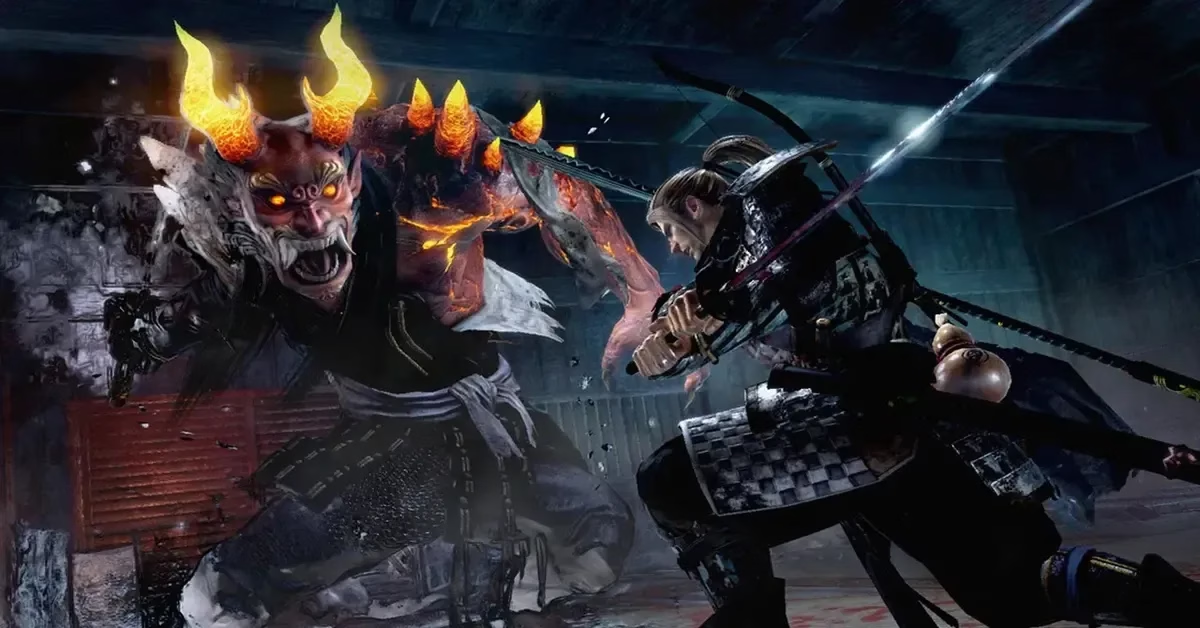
Nioh 2: The Prequel That Surpassed
Listening to feedback about the first game's narrative shortcomings, Team Ninja made a crucial change for the 2020 sequel: a customizable protagonist. Set as a prequel during the Sengoku period, Nioh 2 allowed players to create their own half-Yokai warrior, strengthening personal investment in the story.
The sequel introduced Burst Counters—a revolutionary mechanic for countering the most dangerous enemy attacks. Three distinct counter types emerged:
-
Feral - Aggressive, forward-moving counters
-
Brute - Tank-style, damage-absorbing responses
-
Phantom - Evasive, precision-based dodges
Each type demanded different playstyles and enemy understanding. Combined with expanded Yokai powers, players gained supernatural abilities that dramatically increased combat options.
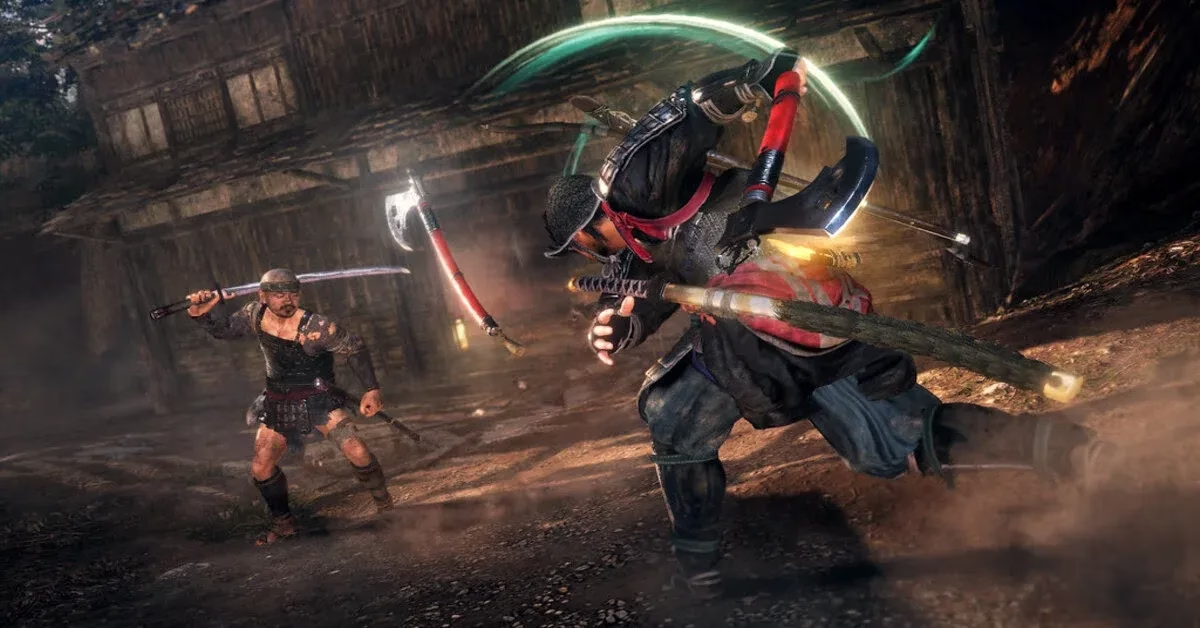
The level design received significant improvements. Environments featured more vertical elements, hidden shortcuts, and interconnected areas. Yokai Realms—corrupted zones where demons held sway—became both mechanical challenges and narrative devices, draining Ki while providing unique combat scenarios.
Community reception proved overwhelmingly positive. Better checkpoint placement, more varied missions, and tighter integration between story and gameplay addressed many criticisms of the original. The game felt simultaneously more accessible yet deeper.
The Philosophy Behind the Fury
What drives Nioh's design philosophy? It's fundamentally about rejecting passive, defensive gameplay. Team Ninja wants players attacking, not turtling behind shields. The combat system actively punishes hesitation:
-
⚡ Higher attack speeds than traditional Soulslikes
-
🎯 Complex combo systems requiring memorization
-
🔄 Constant Ki management forcing decisions
-
📈 Skill-based progression over level grinding
The extensive loot system draws heavily from Diablo, offering:
-
Weapons and armor with rarity tiers
-
Build-synergizing set bonuses
-
Endless min-maxing opportunities
-
New Game Plus cycles with escalating challenges
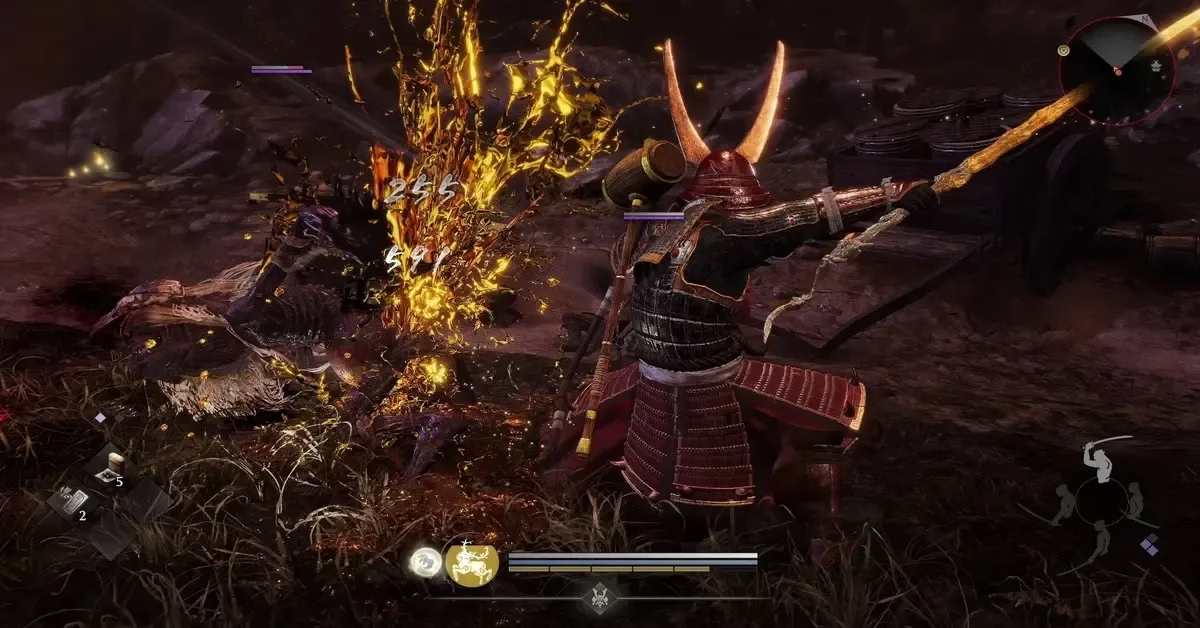
This creates a game for system lovers—players who enjoy dissecting mechanics, optimizing builds, and mastering complex combat patterns. Casual players might find the learning curve steep, but for those willing to invest time, the rewards are substantial.
Nioh 3: Evolution Perfected
Released on February 6, 2026, Nioh 3 represents the franchise's technical and mechanical peak. Running on new engine technology, it delivers smooth animations, enhanced performance, and gorgeously detailed environments. But the biggest change? Moving away from strictly mission-based design toward larger, open areas.
The game introduces a dual combat style system:
-
🥷 Ninja Style - Fast, agile, emphasizing mobility
-
⚔️ Samurai Style - Heavy, powerful, maximizing damage
Players can switch between styles, adapting to different enemy types and situations. The redesigned skill system allows expanded capacity, enabling even more individualized builds. Has Team Ninja finally perfected their formula?
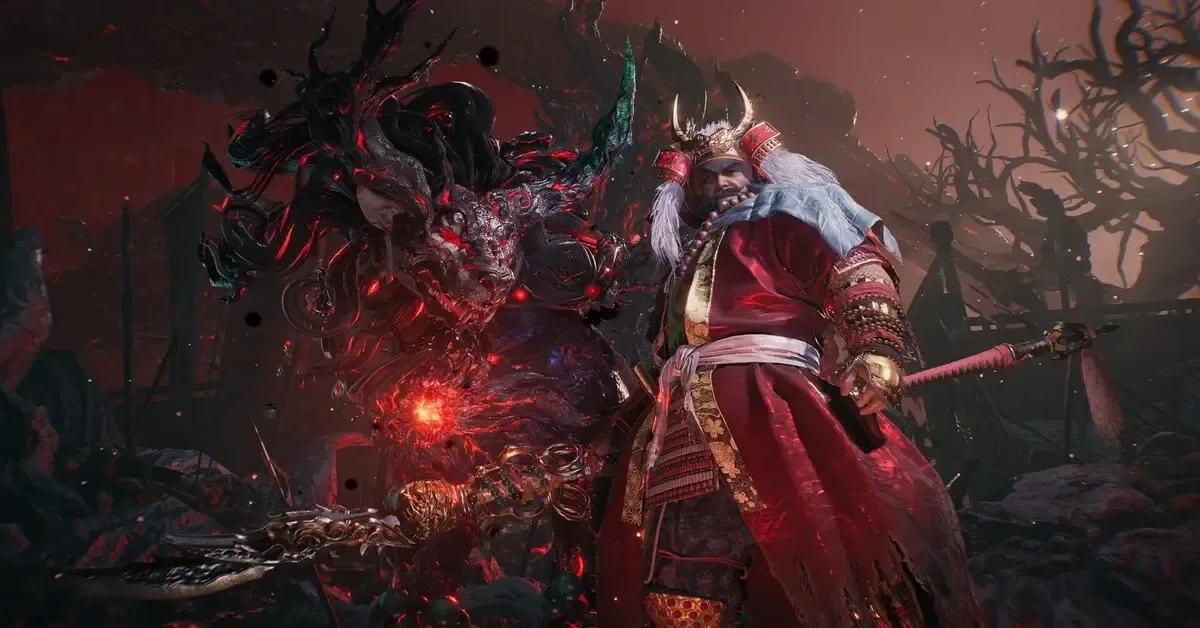
Early reception suggests yes. With 82% positive Steam reviews shortly after launch, players praise tighter mechanics, improved level design, and better progression tuning. The environments offer multiple vertical paths, clever shortcuts, and optional challenges that feel rewarding rather than punishing.
Difficulty spikes—a persistent criticism of earlier entries—have been smoothed out. Side missions now integrate more naturally into both narrative and gameplay progression, feeling less like recycled content and more like meaningful expansions of the main experience.
Gamers eager to dive into the latest samurai action can Buy Nioh 3 CD Key on DealNest for just $38.21, currently 43% off.
History Meets Dark Fantasy
Nioh's world-building succeeds through its careful balance of historical accuracy and supernatural elements. The series primarily explores Japan's Sengoku period, incorporating real warlords, clans, and power struggles. Yet it deliberately distorts this history by weaving in Yokai—supernatural creatures from Japanese folklore.
These demons aren't mere fantasy additions; they embody:
-
🌊 Forces of nature
-
😱 Human fears and anxieties
-
⚖️ Moral decay and corruption
-
🎭 Cultural beliefs and traditions
The mythology unfolds through gameplay rather than exposition. Players learn about different Yokai types through combat encounters, environmental storytelling, and boss mechanics. No codex entries or lengthy explanations—just pure experiential learning.
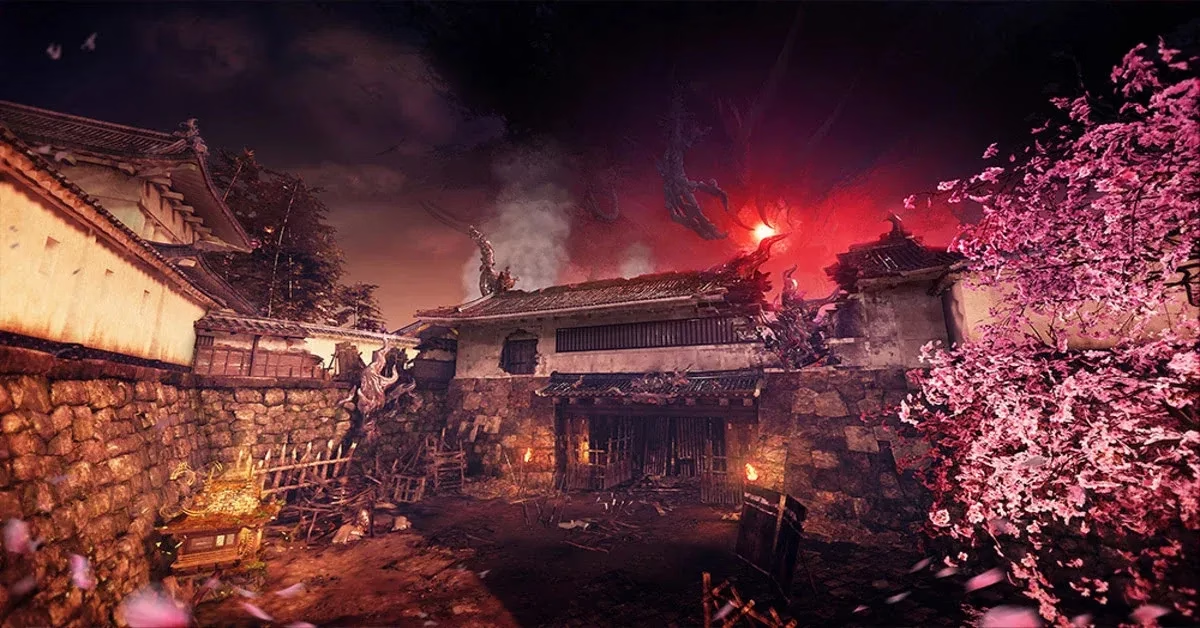
For Western audiences, Nioh serves as a cultural gateway. It introduces players to Japanese folklore, Shinto beliefs, and historical periods they might never otherwise encounter. The consistent world-building across all three games creates a cohesive dark fantasy universe that feels authentically rooted in Japanese culture.
What's Next for the Demon Slayers?
With Nioh 3's successful 2026 launch, Team Ninja faces an interesting question: where does the franchise go from here? The developers describe this as "a conclusion to the current development phase" rather than an absolute ending. So what can players expect?
Short-term plans include:
-
Post-launch patches and refinements
-
Multiple DLC expansions (following previous games' patterns)
-
New regions, weapons, and Yokai varieties
-
Additional story chapters
-
Endgame content and difficulty tiers
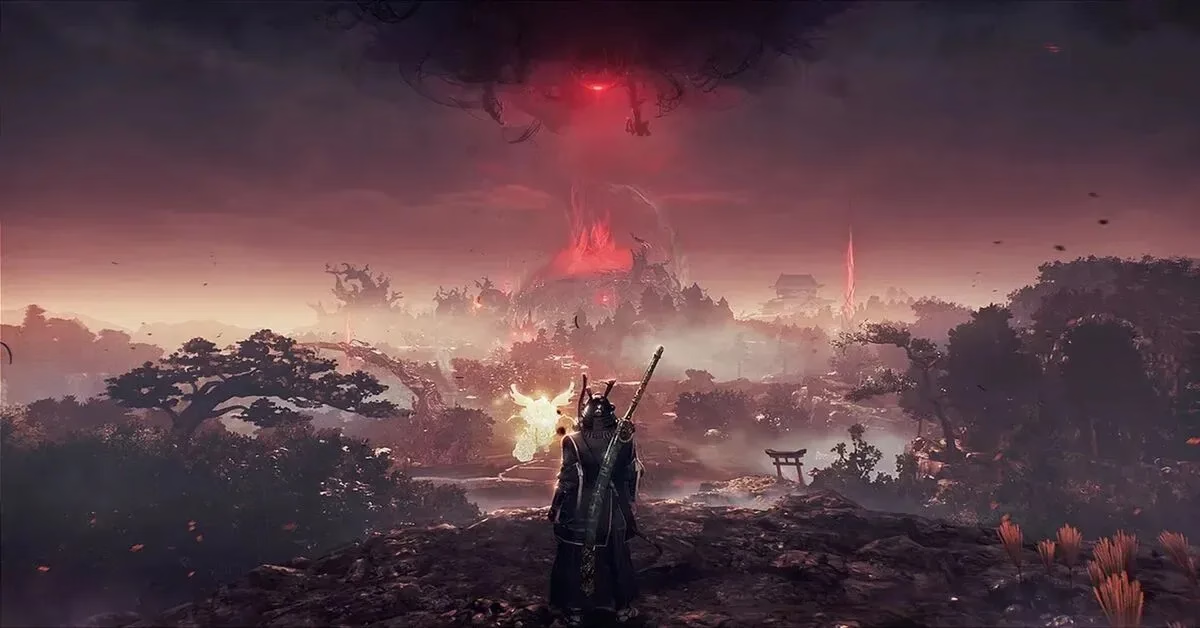
A Nioh 4 remains unconfirmed, but given the third game's strong player numbers and critical reception, it certainly isn't off the table. Team Ninja has proven they can iterate meaningfully on their formula without losing the core identity that makes Nioh special.
Will they explore different historical periods? Introduce new combat systems? Expand the open-world elements? Only time will tell.
The Legacy of a Franchise
Nioh has accomplished something remarkable: it escaped the shadow of "Souls clone" to establish its own distinct identity. The franchise successfully merges uncompromising action gameplay, intricate combat systems, and deep RPG mechanics with Japanese history and mythology in ways no other series has matched.
Across all three games, Team Ninja chose evolution over revolution. Each sequel refined and expanded without abandoning core principles. The result? A franchise that stands confidently alongside—not beneath—the games that inspired it.
Today, Nioh occupies a unique position in the action-RPG landscape. It's unapologetically designed for players who prioritize:
✅ Mechanical depth and mastery
✅ Steep but rewarding learning curves
✅ System understanding over accessibility
✅ Active, aggressive combat philosophy
✅ Endless build optimization potential
For those willing to meet its demands, Nioh offers experiences few other games can match. It's not just about defeating demons—it's about mastering a combat language that speaks in stances, Ki pulses, and perfectly timed counters. If you're ready to face the demons, compare Nioh 3 prices today. And in that mastery lies some of the most satisfying action gameplay ever created. 🎮⚔️